

Please Consider the Environment Before Printing This Email
The mainstream environmental movement has no fucking clue...

Welcome to Biocentric, a newsletter about sustainability, greenwashing, and resistance. It’s written by auther and organizer Max Wilbert. If you want to follow, you can subscribe for free. Paid subscribers, in return for supporting this publication and the activism you see here, receive access to private posts which contain behind-the-scenes reports and unreleased drafts.
The other day I received an email from a regional leader with the Nature Conservancy, a corporate-friendly non-profit with an annual budget of more than a billion dollars and partnerships with some of the most destructive corporations on the planet — Caterpillar, ExxonMobil, Amazon, Starbucks, and many more.
The signature said, “please consider the environment before printing this email.”
I cringe whenever I see this statement, because this seemingly innocuous phrase actually reflects much of the ignorance and collusion that underlies our crisis. Here’s why.
Use of all raw materials is increasing
Historian of energy and materials Jean-Baptiste Fressoz, author of More and More and More: An All Consuming History of Energy, has written that “despite all the technological innovation of the 20th century, the use of all raw materials has increased.”
Fressoz reminds us to:
“Focus on material flows… modernization is not about ‘the new’ replacing ‘the old’, or competition between energy sources [and materials], but about continuous growth and interconnection. I call it ‘symbiotic expansion’… The energy transition is a slogan but no scientific concept. It derives its legitimacy from a false representation of history. Industrial revolutions are certainly not energy transitions, they are a massive expansion of all kinds of raw materials and energy sources.”
The idea that by not printing emails, we can reduce paper consumption is a fallacy that is only possible when one doesn’t understand Fressoz’s warning, which is based on Jevons paradox.
Jevons paradox
On a macroeconomic scale, increased efficiency — for example, the efficiency enabled by switching from paper-based offices to electronic communications — leads directly to growth. Economists have understood this since at least 1865, when William Stanley Jevons, a British mathematician and pioneer in economic theory, published his book The Coal Question.
This was in the midst of the industrial revolution, and the U.K.’s economy depended on coal. Coal-fired steam engines pumped water, ground grain, propelled trains and boats, excavated canals, powered factories, and dug more coal. Jevons wrote, “[Coal] is the material energy of the country—the universal aid—the factor in everything we do.”
Prior to the publication of The Coal Question, several new steam engine designs and improvements, starting with Boulton’s and Watt’s improvements in the 1790s, had boosted efficiency. A key section of The Coal Question examined the impact of this increased efficiency on coal consumption. Jevons concluded, “The economical use of coal [will not] reduce its consumption. On the contrary, economy renders the employment of coal more profitable, and thus the present demand for coal is increased.”
This is crucial: under cultural and economic conditions that reward growth, increased efficiency not only doesn’t generally reduce demand, but instead increases it. This is called “the rebound effect.” The same is true of material use.
Total global energy use by human beings has been increasing for at least the several hundred years for which data is available, and almost certainly for 10,000 years, since the beginning of civilization. During this time, the efficiency with which human civilizations use both energy and materials has also risen more or less steadily. Today, farms feed 10 times as many people per acre as in early agricultural societies. Has that increase in efficiency meant less land under cultivation or, instead, greater population? Of course, it’s the latter. Likewise, has the increase in water-use efficiency meant more water left in rivers; or more land under irrigation? Of course, once again, it’s the latter. Has the near doubling in automobile fuel efficiency standards over the last 40 years meant less gasoline is burned? Of course not.
Efficiency has risen in production, too. Early factories were powered by mills or steam engines, with this power then transmitted through mechanical straps, gears, and shafts that were only about 25 percent efficient: three-quarters of the energy was lost to friction. Later, these mechanical systems were replaced by DC electric lines powering motors, then the more efficient AC. Today, electrical transmission and distribution in the U.S. results in only about a 10 percent loss in energy. New high-voltage direct current (HVDC) cables are being used to carry power long distances with even greater efficiency. In the near future, superconducting power lines may reduce transmission losses to almost zero. Has that increase in electrical transmission efficiency meant we need less electrical generation? Of course not. Instead, it’s led us to the world we’re in now, where bitcoin mining and AI data centers hoover up as much power as possible.
A 2017 article in MIT News, entitled “Study: Technological progress alone won’t stem resource use: Researchers find no evidence of an overall reduction in the world’s consumption of materials,” discussed a Massachusetts Institute of Technology-led study that “gathered data for 57 common goods and services, including widely used chemical components such as ammonia, formaldehyde, polyester fiber, and styrene, along with hardware and energy technologies such as transistors, laser diodes, crude oil, photovoltaics, and wind energy. They worked the data for each product into their equation, and, despite seeing technological improvements in almost all cases, they failed to find a single case in which dematerialization—an overall reduction in materials—was taking place.
In follow-up work, the researchers were eventually able to identify six cases in which an absolute decline in materials usage has occurred. However, these cases mostly include toxic chemicals such as asbestos and thallium, whose dematerialization was due not to technological advances, but to government intervention. There was one other case in which researchers observed dematerialization: wool. The material’s usage has significantly fallen, due to innovations in synthetic alternatives, such as nylon and polyester fabrics. In this case, Magee argues that substitution, and not dematerialization, has occurred. In other words, wool has simply been replaced by another material to fill the same function.”
One of the lead authors notes, “There is a techno-optimist’s position that says technological change will fix the environment. This [study] says, probably not.”
The era of the “paperless office”
Depending on who you ask, logging for global pulp and paper production could double in the next 25 years, or has more or less leveled off over the past decade. I don’t know the truth, but no one is claiming the industry is shrinking.
Let’s make my argument more difficult and assume that global paper and pulp production has leveled off. An optimist would look at that and say “the paperless office and not printing has worked! We’ve stopped the growth in logging!”
My take is different: rather than being halted by the brave and bold actions of those who craft these email signatures (“oh, what sacrifice they make for the planet! I swoon!”), the logging industry has plateaued because it has essentially grown as large as it can possibly get.
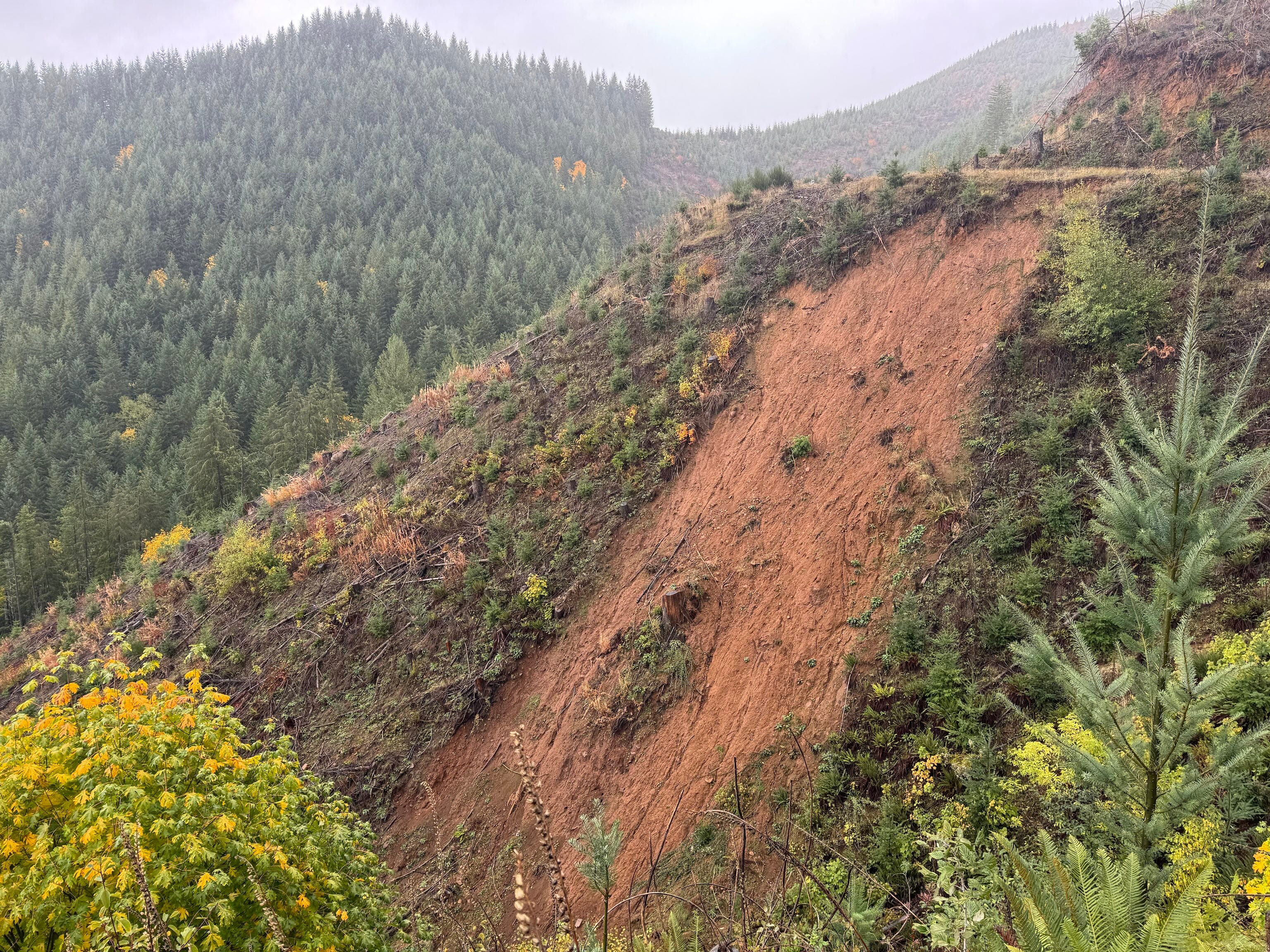
Most of the world’s old-growth forest is gone. The few remaining frontiers of timber production, like the boreal forest, the Amazon heartland, and the central African jungles, are being assailed as rapidly as is physically possible given the constraints (legal roadblocks, indigenous forest defenders, logistical challenges, etc.) that hold the industry in check. Meanwhile, industrial timberlands — plantation forests grown like GMO cornfields — are producing as much timber as they can, gradually degrading soils and becoming less and less productive with each “rotation” (clearcut). Only by converting more land into plantations can production even be maintained at its current levels.
The industry is maxed out.
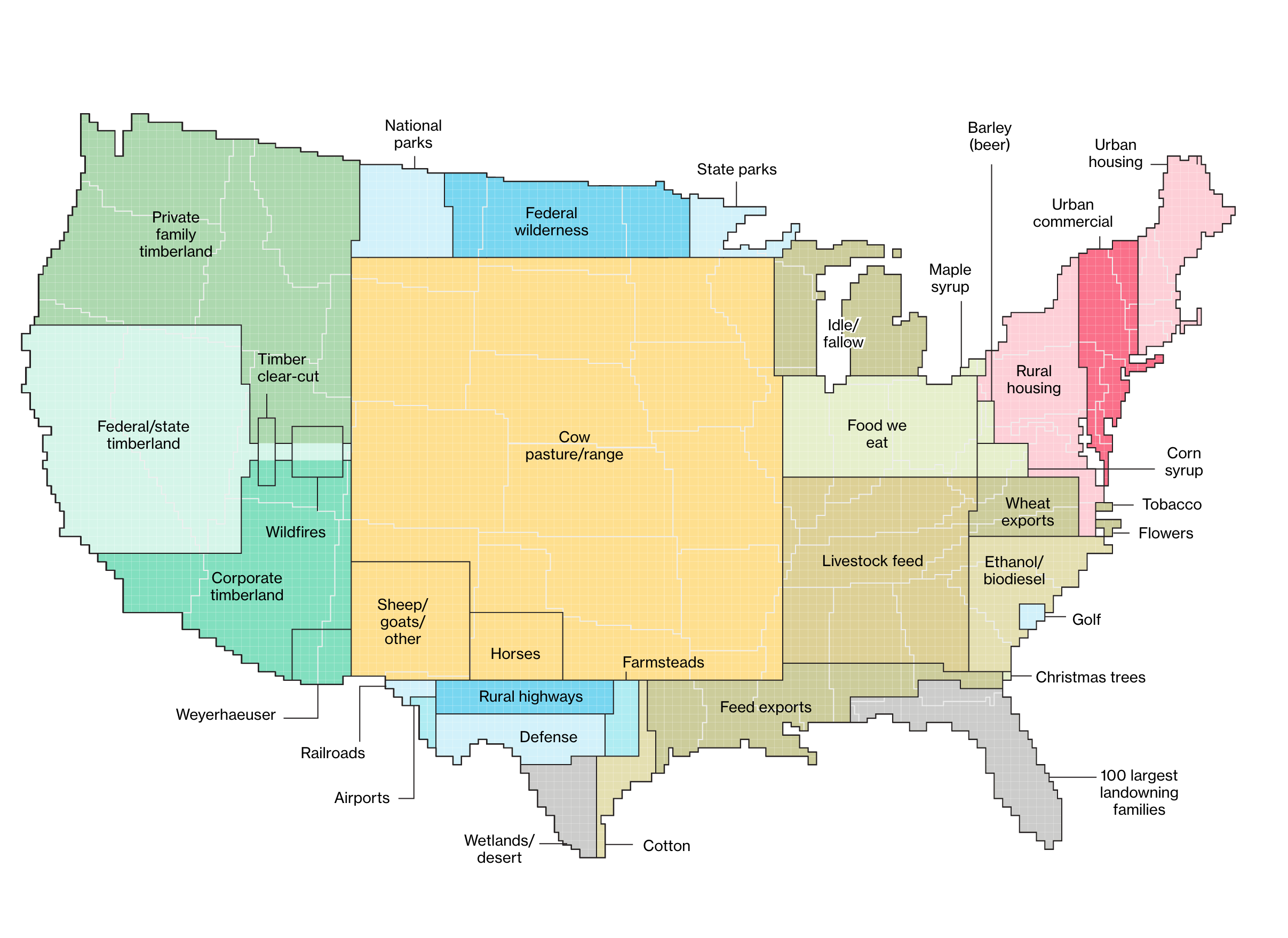
In this situation, asking people to not print their emails should not be seen as actually reducing global paper and pulp consumption, but rather as creating space for the growth of other sectors. Cardboard and takeout food containers, especially; in the age of Amazon, e-commerce, Doordash, and Uber eats, these are the fastest growing segments of the pulp and paper industry.
Moreover, whatever decrease in environmental impact from printing has come about due to the rise of email and other forms of electronic communication has been obliterated by growth in other parts of the global economy. The ascendence of the Internet and information technology has facilitated trade and economic growth on a scale that was impossible without management by machine. This has enabled and facilitated economic expansion into the last remaining frontiers of old growth and protected forests around the planet; energy and material use on scales never before seen; massive expansions in plastic production and mining. It has facilitated the continuation of overshoot, a situation in which more and more people are using more and more resources in an ever-increasing downward cycle of unsustainability.
The idea that not printing an email protects us is not only naive, it is disconnected from reality. Organizations like the Nature Conservancy should know this. These are professionals. Many of the employees at the organization have master’s degrees and PhDs. They’ve studied environmental science. They should understand these concepts — except, of course, that this information isn’t taught in essentially any environmental studies or science courses (hence the need for this newsletter). Hopefully a professor or two will tell me I’m wrong in the comments section.
When an organization is unwilling or unable (due to their funding sources) to challenge the fundamental structures of growth and capitalism, their efforts will be pigeonholed into a few ineffective and idealistic tactics. They’re little more than useful idiots for the ruling class.
I’ve criticized The Nature Conservancy before — for their connection to the chemical poison industry and widespread use of pesticides on their lands, for their collaboration with the most destructive industries on the planet (both as a funding source and by leasing their “conserved” lands for oil and gas drilling), and for a personal experience in which they attempted to bring a greenwashing agenda to a group of grassroots indigenous people — a tone deaf exercise in ideological colonialism. They deserve the criticism. For organizations like The Nature Conservancy, reality is less important than the mythology that they peddle and the paychecks that keep flowing.
Sure, don’t print emails. Reduce your personal consumption. Make ethical choices. By all means. But don’t pretend this is some grand political act. This is called “being a good person,” and it should be a baseline. We need far, far more.
In this era of crisis, we all need to be accountable to the truth. That’s the first step. And here’s the truth: if a paper-based industrial capitalism is unsustainable, a digital-based industrial capitalism is even more unsustainable. You won’t see that in the email signature from a “big green” organization. It scares off the foundations.
I’ve left all social media to focus my attention on organizing and writing. That means I rely entirely on readers like you to share this content online. If you appreciate what you read here, please share on social media, discussion forums, and in direct messages to friends. Thank you!
Biocentric is a liberated zone with zero AI-generated content.

News on one of the pesticides that The Nature Conservacy (as well as many other non-profits, businesses, individuals, and government agencies) uses regularly: https://publichealth.gmu.edu/news/2025-06/international-study-reveals-glyphosate-weed-killers-cause-multiple-types-cancer
A few years ago, as a small press publisher i learned that paper costs went up - now it costs maybe 30% more - at the same time that more resource energy was going for, as you mention, Max, cardboard boxes, for one showing how the resources gravitate to where the bigger biz is.