

The Closure of Hormuz as (Unintentional) Climate Action
Reflecting on Iran's eco-feminist movement

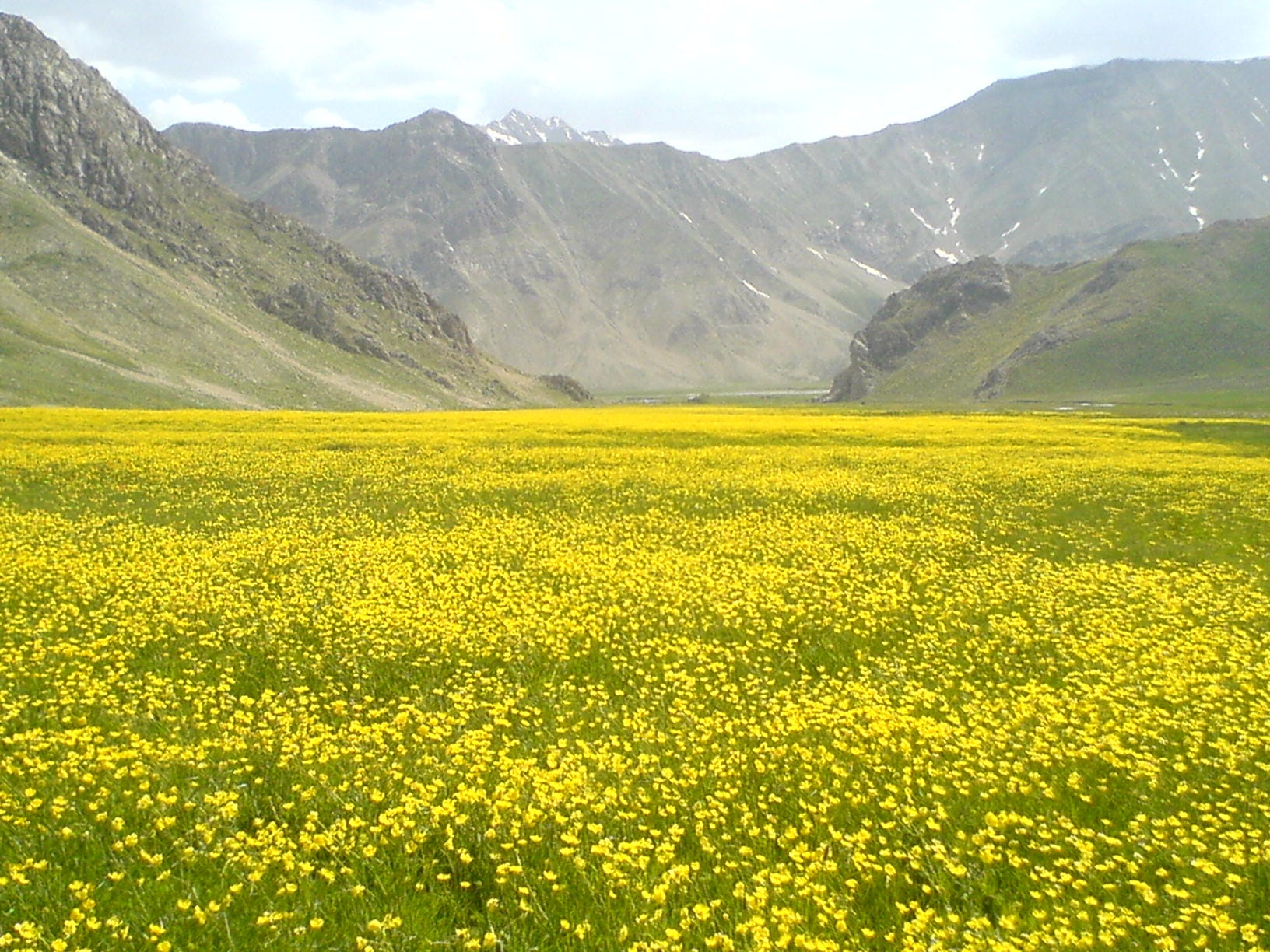
This is Biocentric, a newsletter about sustainability, greenwashing, and resistance. I’m author and organizer Max Wilbert. If you want to follow, you can subscribe for free. Paid subscribers, in return for supporting this publication and the activism you see here, receive access to private posts, which contain behind-the-scenes reports and unreleased drafts.
Iran, contrary to what many westerners would expect, is home to a vibrant environmental movement. It is also the site of one of the most significant environmental success stories of the last 50 years.
Malagha Mallah was born in a caravanserai, a roadside inn, in 1917. She was the granddaughter of Bibi Khanoom Astarabadi, Iran’s first feminist writer and the founder of the first girls school in the nation in 1906. Her mother, Khadijeh Afzal Vaziri, introduced environmental politics into the family.
Mallah was encouraged to pursue an education, and despite marrying at 17, went on to study philosophy, social sciences, and sociology, eventually traveling to France to study for a PhD and then becoming a librarian at the University of Tehran. In 1973, while cataloging books, she encountered a work on pollution which she didn’t know how to categorize. She read it cover-to-cover, and over the next four years learned as much as she could about environmental issues.
In 1977, she retired from her work and began a program of grassroots environmental education, but the Islamic Revolution (1979) and Iran-Iraq War (1980-1988) made organizing difficult as the nation was thrown into crisis. Further, Iran was undergoing a demographic crisis. As hundreds of thousands died on the battlefield to machine gun fire and Saddam’s chemical weapons (sponsored by the United States), state policies encouraged maximum population growth, and the average Iranian woman gave birth to nearly 9 children — essentially the biological maximum.
The nation was creaking under the weight of a growing ecological crisis and a society heavily burdened by a massive cohort of young children. As the war with Iraq ended, people like Mallah as well as environmental specialists, hydrologists, public health experts, and reproductive health doctors successfully petitioned Iran’s government to launch what has been called “the world’s most enlightened and effective family-planning program.”
Iran’s Feminist Miracle
Dr. Hourieh Shamshiri Milani, an Iranian OB/GYN, explained to Alan Weisman, writing in his book Countdown, how the program worked. It’s worth quoting at length:
If it all was voluntary, how did Iran do it?
Nodding to the Persian music issuing from the piano, Dr. Shamshiri smiles, remembering. “We used horses. Doctors and surgeons, teams from universities, carrying our equipment on horseback to every little village.”
The horseback brigades that Dr. Hourieh Shamshiri and her fellow OB-GYNs accompanied to the farthest reaches of the country made any kind of birth control—from condoms and pills to surgery—available to every Iranian, for free. Because Ayatollah Khomeini’s original contraception fatwa emphasized that neither mother nor child should be harmed, it was assumed to exclude both abortion and operations. But his successor, Ayatollah Ali Khamenei, issued a fatwa of his own—“When wisdom dictates that you do not need more children, a vasectomy is permissible”—that was interpreted to include tubal ligations for women.
The program’s initial goals were modest. According to Mohammad Abbasi-Shavazi, they hoped to reduce the average fertility rate of Iranian women to four children by 2011, and eventually drop the population growth rate from its astronomical levels during the war to slightly above replacement rate. But Iranian families were just as broke and fatigued as the nation, and they leaped at the chance for fewer children. Within two years, Iran’s demographers were disbelieving their own numbers.
The horseback doctors had planned to encourage women—who were not required to seek husbands’ approval for birth control—to space pregnancies three to four years. They were to advise them to bear children only between ages eighteen and thirty-five, and to suggest stopping with three children. “But every woman who already had children wanted an operation,” says Dr. Shamshiri. “More than a hundred thousand women of that generation were sterilized. All the younger ones told me they only wanted two, one of each if they could. I’d ask them why. ‘The cost of rearing children,’ was the first thing they said. So I’d ask them to imagine that tomorrow their economic problems had been solved, how many children would they want. Again, they answered, ‘Two, because of education. We should send our daughters to university.’ ”
They were seeing modern women on television—including herself, as she and other gynecologists were now frequently on Iranian TV programs. “Families would find my telephone number. They’d ask, ‘How did you get this degree? How can we educate our daughters like you?’ ”
Increasingly, the answer was easy. All the accolades that Iran’s family-planning program received in forthcoming years cited one indispensable factor: female education. Not just primary and secondary, but university. In 1975, barely a third of Iranian women could read. In 2012, more than 60 percent of Iranian university students were female. The literacy rate for females twenty-six and under was 96 percent [for reference, the current literacy rate in the United States is 79 percent, and has been declining rapidly over the past decade]…
“There was no covert coercion [in Iran’s family planning program], she’d explain. The sole requirement was that all couples attend premarital classes, held in mosques or in health centers where couples went for prenuptial blood tests. The classes taught contraception and sex education, and stressed the advantages of having fewer children to feed, clothe, and school. The only governmental disincentive was elimination of the individual subsidy for food, electricity, telephone, and appliances for any child after the first three. By 2000, Iran’s total fertility rate reached replacement level, 2.1 children per woman, a year faster than China’s compulsory one-child policy. In 2012, it was 1.7.”
In 2002, Iran’s minister of health accepted the United Nations Population Award for “the most enlightened and successful approach to family planning the world had ever seen.” By educating and empowering women, Iran had rapidly increased its health and well-being and reduced the birth rate to below replacement level — allowing for a slow decline in population to begin — without any coercion at all.
As Richard Stearns has written, “The single most significant thing that can be done to cure extreme poverty is this: protect, educate, and nurture girls and women and provide them with equal rights and opportunities—educationally, economically, and socially.… This one thing can do more to address extreme poverty than food, shelter, health care, economic development, or increased foreign assistance.”
The Future of Iran’s Environment
In 1993, at age seventy-four, Mallah founded the Women’s Society Against Environmental Pollution and began traveling the country to organize chapters.
“Women,” she would tell recruits, “are instinctive teachers. We’re also the world’s main consumers: most advertisements try to attract us. We produce the most household waste. But just as population control rests with us, we can cure our shopping disease and our polluting, and educate our children to care for the environment.”
Mallah died in 2021 at the age of 104. Iran today is home to hundreds of national parks and protected areas, and to a vibrant but persecuted environmental movement. Malagha Mallah is often called the mother of this movement. It’s work is certainly cut out for it.
On Sunday, the Israeli air force fired missiles at the primary fossil fuel hub in Tehran, home to 16.8 million people. The facility exploded, launching flames hundreds of feet into the air and unleashing plumes of black, toxic smoke.
As Drop Site News reported:
“The Iranian Red Crescent issued a warning on Sunday for Tehran residents to stay indoors, saying that the explosions had spread ‘toxic hydrocarbon compounds and sulfur and nitrogen oxides’ in the air. The group warned that any precipitation would result in highly dangerous acid rain capable of causing chemical skin burns and lung damage. It also encouraged people to protect exposed food.”
This type of ecological disaster typifies wartime. As my friend Kollibri terre Sonnenblume wrote, “war inflicts catastrophic and often long-lasting damage on the environment.” Look no further than Fallujah, burn pits at US military bases in Afghanistan, or the hundreds of military Superfund sites scattered across the US to see the truth of this. Already, the catalog of ecological catastrophes unleashed in this war is long.
Iran, like all industrialized nations, is no stranger to environmental catastrophe. As with most of the Middle East, it is desertified, overgrazed, and water-stressed. Iran’s rivers are mostly dry and its aquifers shrinking rapidly.
In 2015, Isa Kalantari, an advisor to the Iranian government specializing in water issues, predicted that without serious reductions in Iranian water use, “Approximately 50 million people, 70 percent of Iranians, will have no choice but to leave the country.” Last year, facing extreme drought that has now lasted nearly a decade, Iran’s president Masoud Pezeshkian said that Iran had “no choice” but to move the entire city of Tehran to a wetter, coastal region of the country, a project estimated to cost $100 billion and take decades.
War makes all of this worse.
The Closure of Hormuz: (Unintentional) Climate Action
Eco-protection does not flourish in times of war. Yet at the same time, Iran’s blockade of the Straight of Hormuz is preventing 20 million barrels of oil per day from being burned. By way of comparison, the #NoDAPL movement at Standing Rock delayed the construction of the Dakota Access Pipeline and stopped approximately 45 million barrels of oil from being burned. In two weeks of war, then, Iran’s blockade has had a climate impact equivalent to more than 6 Standing Rock movements. Factoring in the demand destruction caused by increased oil prices around the world, the impact is likely far greater.
Obviously, this is not deliberate. The Iranian government aims to hammer the global economy to discourage attackers, not to defend the climate. Like the United States, Iran is a petro-state, a “carbon technocracy” with an electrical grid and transportation system powered mostly by fossil fuels, an economy reliant on energy exports, and a societal structure that both reflects and reinforces this technology.
Yet from the perspective of the climate, motivation doesn’t matter. Either the oil is burned, or it isn’t.
Throughout the Middle East, pumpjacks are standing still and refineries are shuttered. This, as I have argued before, is the more likely path towards reductions in carbon emissions: not the rise of renewable energy, which has flourished over the past decade as more fossil fuels have been burned than ever before, but the collapse of the global industrial economy due to a combination of ecological breakdown, declining resource availability, climate disasters, inequality-induced societal fracturing, and resistance movements striking pillars of industrial civilization to deliberately induce its fall.
Many people agree. Tim Garrett, a professor of atmospheric physics at the University of Utah, has argued that “Only complete economic collapse will prevent runaway global climate change.” Thirteen years ago, Leanne Betasamosake Simpson (Mississauga Nishnaabeg) said “there are a lot of people within the indigenous community that are giving the economy, this system, 10 more years, 20 more years, that are saying ‘Yeah, we’re going to see the collapse of this in our lifetimes.’ Our elders have been warning us about this for generations now—they saw the unsustainability of settler society immediately. Societies based on conquest cannot be sustained.”
As a person living in an industrialized nation and born into a capitalist society, I get most of my food from the grocery store and my water from an electric well pump. Collapse is not something that I personally look forward to. I have a young son. Already we struggle to make ends meet. But ecologically, collapse is likely the best path forward, given that governments and communities have refused to take meaningful action to halt global warming, the mass extinction of biological life, and the rest of the eco-crisis.
The best hope, for my son and for the other children of the world, is to see the global industrial economy, with its machinery of war, fall, so that something new — local, small scale, ecological — may rise in its place.
I’m no longer on social media, so I rely entirely on readers to share this content. If you appreciate what you read here, please share on social media, discussion forums, and in direct messages to friends.
Biocentric is a liberated zone with zero AI-generated content.
This says it all: “Societies based on conquest cannot be sustained.” Whether it’s drawdown or collapse, or some combination of both, the shift is underway. Small and local community is the way.
"Tim Garrett, a professor of atmospheric physics at the University of Utah, has argued that “Only complete economic collapse will prevent runaway global climate change.” "
He's got it!! Check out his material.
Abstract. In a prior study (Garrett, 2011), I introduced a simple economic growth model designed to be consistent with general thermodynamic laws. Unlike traditional economic models, civilization is viewed only as a well-mixed global whole with no distinction made between individual nations, economic sectors, labor, or capital investments. At the model core is a hypothesis that the global economy’s current rate of primary energy consumption is tied through a constant to a very general representation of its historically accumulated wealth. Observations support this hypothesis, and indicate that the constant’s value is λ = 9.7 ± 0.3 milliwatts per 1990 US dollar. It is this link that allows for treatment of seemingly complex economic systems as simple physical systems. Here, this growth model is coupled to a linear formulation for the evolution of globally well-mixed atmospheric CO2 concentrations. While very simple, the coupled model provides faithful multi-decadal hindcasts of trajectories in gross world product (GWP) and CO2. Extending the model to the future, the model suggests that the well-known IPCC SRES scenarios substantially underestimate how much CO2 levels will rise for a given level of future economic prosperity. For one, global CO2 emission rates cannot be decoupled from wealth through efficiency gains. For another, like a long-term natural disaster, future greenhouse warming can be expected to act as an inflationary drag on the real growth of global wealth. For atmospheric CO2 concentrations to remain below a “dangerous” level of 450 ppmv (Hansen et al., 2007), model forecasts suggest that there will have to be some combination of an unrealistically rapid rate of energy decarbonization and nearly immediate reductions in global civilization wealth. Effectively, it appears that civilization may be in a double-bind. If civilization does not collapse quickly this century, then CO2 levels will likely end up exceeding 1000 ppmv [emphasis added]; but, if CO2 levels rise by this much, then the risk is that civilization will gradually tend towards collapse.
Originally published as Garrett, T. J.: No way out? The double-bind in seeking global prosperity alongside mitigated climate change, Earth Syst. Dynam., 3, 1-17, https://doi.org/10.5194/esd-3-1-2012, 2012.
https://www.earth-syst-dynam.net/3/1/2012/esd-3-1-2012.html